
Solomon Islands Song as History: Kastom, Preservation, and Transformation
ABSTRACT
Source here
In North Malaita, Solomon Islands, kastom stori (oral storytelling), song, and dance are intrinsically connected. Song and dance may be thought of as abbreviated story forms. These archives of cultural knowledge have documented the lives and experiences of our peoples for generations. Solomon Islands dance and song are key signifiers of identity and place, and they are also accessible teaching tools – available in every household to relay genealogy, culture, and connection. Songs evoke emotion and engage family members in the familial and tribal stories of their past and present. This article will discuss local perspectives on music preservation and transformation, survey examples of traditional and contemporary Solomon Islands song, and explore the significance of music in recounting local Solomon Islands experiences, culture and thinking – ancient and modern.
I hear this song, I experience this dance, and I feel these words deeply. Chills crawl down my spine and my heart drops as I feel our grannies crying and the collective wails from our women – their voices break and their dance heralds the loss of a great leader, fataabu, the head of our bloodlineFootnote1– our high priest.
Fataabu no longer live in this world, but this song connects us through the ages to this ancestor who came before us. This connection transcends time and space, and teaches us about our past, about our people, and about who we are. This performance is visceral, meaningful, and emotional – so that we remember.
Over the past 130 years, Solomon Islanders have experienced colonialism, and witnessed the arrival of missionaries and government administrators,Footnote2 the horrors of Second World War battles,Footnote3 and the introduction of foreign-owned businesses. Our peoples have experienced the fight for independence: Maasina Rule, Moro Movement,Footnote4 and political border changes,Footnote5 and in more recent years endured a political coupFootnote6 and intense conflict.Footnote7 These significant events and changes have had a lasting impact on the collective nation, influencing changes to cultural identity and practice, challenging Indigenous belief systems and moral codes, and threatening spiritual health and wellbeing.Footnote8 In the midst of these events, Solomon Islanders have recorded change through their oral tradition art forms and visual arts practices. Art forms such as dance, song, storytelling, carving, weaving, tattoos, canoe, and house designs leave impressions of the histories our peoples have experienced and the places where they have lived.Footnote9 For generations, these practices have connected Solomon Islanders to each other, and to their land, water, and sky environments.
Lau–Mbaelelea, Solomon Islands
My ancestral homelands are the Lau (coastal) and Mbaelelea (bush/forest) regions of North Malaita, Solomon Islands. My people are to‘a i asi – people of the sea, and to‘a i tolo – people of the bush.
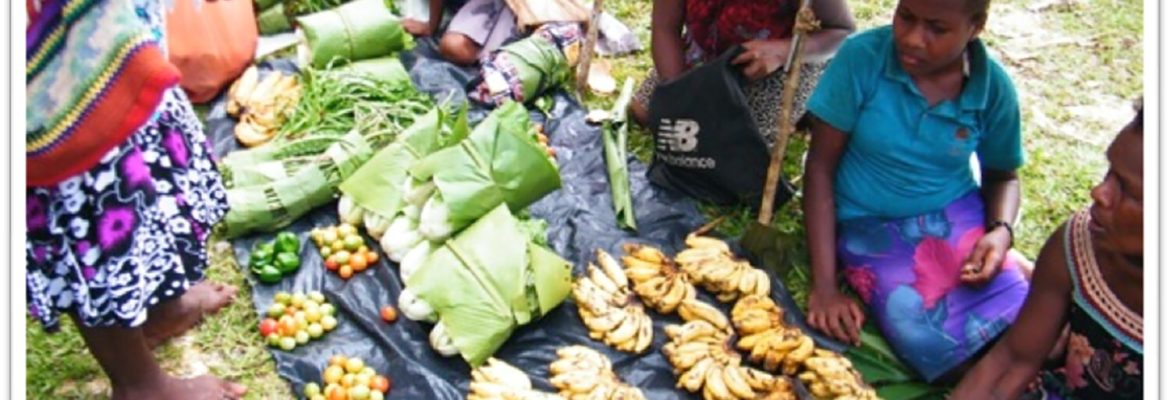
Lau–Mbaelelea is a rural environment in North Malaita where local subsistence living is still commonplace. Through daily fishing and gardening practices, our people follow in the footsteps of our ancestors. In everyday life, we use natural resources – for example, firewood for cooking and rivers for bathing. In Mbaelelea we live among the dense rainforests, teeming with plant and bird species, mountains, rivers, and tributaries. Along the coast we navigate daily between the 60-odd artificial islands that grace Lau Lagoon, its outlying coral reefs, and the ocean.Footnote10 In the Lau–Mbaelelea region, and indeed much of Malaita, it is necessary to observe the elements and to have a symbiotic relationship with the environment (Figures 1 and 2).
Northern Malaita is geographically distant from urban towns such as Auki, located an eight-hour truck ride away, and our capital city Honiara, an additional six hours by boat. It is likely that our geographic isolation has contributed to North Malaitan identity. North Malaita is historically regarded as a cultural stronghold region where kastom (Indigenous culture) is the overarching system that reinforces local values, informs the daily lives of our people, and leads us through our traditional rituals. These traditional ways of living include our own methods of history-keeping. For generations, oral tradition forms have been our storehouses for history (Figures 3
and 4
).
To date, Solomon Islands history relayed by historians has been disseminated through books and writing. Anthropologists and archaeologists have regularly documented visual art forms, including photographs of music and dance performances. Accounts have often included comment from culture bearers and local communities. Researchers such as Roger Keesing and Ben Burt have documented oral histories of Indigenous Malaitans – Elota from Kwaio, and Michael Kwa‘ioloa in Kwara‘ae.Footnote11 Indigenous Solomon Islands researchers have increasingly used tok stori (conversation) methodologies as part of data-gathering, and clearly support Indigenous teaching methods that use verbal tok stori and apprenticeship-style teaching.Footnote12 However, Indigenous arts practices that are more closely associated with traditional teaching methods, such as kastom story, music, and dance, have rarely been included in history-specific outputs.
It is concerning that oral history-keeping practices are hardly recognized in scholarly resources, history documents, or formal education institutes. Culture bearers and leaders from my own tribes in North Malaita consider this a significant oversight as Malaitan art forms are designed to teach oral histories, to validate and reinforce cultural values and thinking, and to assist with memory retention. We are not the only Pacific peoples who feel this way: Amy Ku‘uleialoha Stillman discusses Hawaiian poetry and hula similarly, stating: ‘In modern hula the act of performance is an act of remembrance’.Footnote13 Our North Malaitan elders worry that if Indigenous history practices continue to be overlooked and neglected, this will further compound the issues faced by our peoples in terms of safe archiving and the continuation of our languages and cultures. All are interlinked.
In postcolonial Solomon Islands, Indigenous practices, teaching methods, and traditions have changed dramatically since the adoption of non-Solomon Islands ways of being. Economic development, introduced education systems, and religious practices have driven these changes.Footnote14 Over the last 70 years or more, throughout Solomon Islands, the teaching of local arts and oral tradition practices has steadily declined. Our culture bearers in Lau–Mbaelelea, now advocate for a renewed focus on traditional teaching practices. Elders state that working together to preserve cultural arts and kastom benefits communities in multiple ways. Preservation improves social health and wellbeing: it helps to maintain local sustainable practices, to nurture the environment and, significantly, local teaching methods revitalize familial and regional histories and strengthen history-keeping practices. Nepia Mahuika considers oral history further:
The defining of oral history is a matter of power and liberation as much as it is a process of revitalization and preservation. Linda Tuhiwai Smith has pointed out that for many indigenous peoples the reclaiming of history ‘is an important part of decolonization’ … Taking ownership of the past, or what oral history is, and what oral tradition might be, is a common theme for indigenous.Footnote15
Mahuika stresses the importance of ‘reclaiming the meaning and practice of oral history’. To date, oral history analysis has focused on archives and stories captured through video and audio recordings. Expanding analytical boundaries to include Indigenous perspectives, methods, and ways of thinking, being, and living, can broaden context/meaning and deepen understandings of oral history practice. Redefining oral history liberates Indigenous historians to freely discuss Indigenous epistemology, theories, and experiences pertaining to oral history, and to significantly expand the discipline.Footnote16
Aside from Indigenous academics and elders, Pacific historians James Whiteman Davidson and Chris Ballard have long championed for the inclusion of Indigenous orality in Pacific history documentation.Footnote17 In Oceanic Historicities, Ballard discusses the importance of performative, sensory, and material experiences, and directly references the integrated connection of these experiences to memory. Ballard also questions the focus of Pacific history to date:
The resolute focus of Pacific History on ‘multicultural situations’ or the ‘colonial encounter’ places a double bind on the discipline: truncating Islander experience and history at both ends, severing continuity with the pre-colonial past as well as more recent postcolonial experience; and positioning historical Islanders as agents largely through their engagement with outsiders.Footnote18
Brian Diettrich suggests that sound itself has distracted historians from investigating music: ‘The widespread notion of song as only entertainment can hinder broad understanding of sung forms as history … Song in Oceania has been more often articulated and studied as music, rather than a mode of historical practice’.Footnote19
This article places a new focus on Solomon Islands orality and explores how rural and urban music art forms are storehouses for history and culture. I will discuss selected art forms from the two most populous regions, Malaita and Guadalcanal. Non-written practices, such as poetry, kastom song, story, and dance, are discussed as valuable methods for history-keeping in North Malaita. Next, a case study on Honiara music will examine the transformation of music practices in present-day Solomon Islands. These examples offer new ways to think about Indigenous knowledge transmission, oral history-keeping, and history-making.
This dialogue aims to further reinforce the significance and relevance of Indigenous perspectives in Pacific history and to honour and recognize the Indigenous Pacific historians among us. This is a call to our Indigenous artists, storytellers, and writers to reclaim local histories, and to continue to teach, share, and express oral history traditions in all their vibrant forms. It is a call to reclaim kastom.
Kastom
The Solomon Islands Pijin word kastom originates from the English word ‘custom’. The Oxford English Dictionary defines custom as ‘A mode of behaviour or procedure which is widely practised and accepted’.Footnote20 However, the Indigenous word kastom has many more layers and dimensions. David Gegeo and Karen Watson-Gegeo further explain the concept of kastom and its local nuances:
Kastom … embraces culture, tradition, norms and modes of behavior; ways of thinking, doing, and creating; and, of course, indigenous epistemology. Anything born of the land and passed from generation to generation is part of kastom.Footnote21
From the outset, then, the word kastom heralds a specific way of Solomon Islands thinking that differs from other cultural approaches; it is a word that expressly refers to Solomon Islands doing – specific cultural activities, creative processes, and genealogical, ancestral connections. Importantly, this definition of kastom refers to the significance of the land itself, and the relationship of the people to it – a relationship that demands cooperation and respect for all to coexist. We live collectively in large households and small hamlets where interdependence and reliance on one another and our environment is crucial to physical and emotional survival and wellbeing. Following kastom is respecting our connections to one another and our places, and recognizing that these connections are the aspects of living we value most.
In Solomon Islands, over 80 languages are spoken,Footnote22 reflected in the great diversity of cultures and ethnicities. However, similarities exist between cultures. When we first meet, it is common to ask each other a series of questions to find out how we are connected. Once we have established our connections, we can then appreciate shared genealogies, shared histories, and shared understandings. This notion of being connected extends beyond the living to include the dead, our ancestors, and spiritual connections to the land, the sea and sky, to our waterways, animals, and to our environment.
To elaborate further, kastom is inextricably related to identity and, certainly, in my Indigenous communities, oral history is inextricably connected to identity. Discussing this same point, Mahuika eloquently explains that when you immerse yourself in Indigenous spaces and places, connect with one another and the environment, you are simultaneously opening yourself to oral history experiences:
As you breathe in the stories, sing the songs, speak the language, and soak in all the politics and protocols … oral history is all around you, evident in the people, art, traditions, environments, and genealogies that speak to inherited experience.Footnote23
For North Malaitans, music, dance, and kastom story are connected strands within a complex weave. The weave informs and reinforces our kastom practices, our cultures, and our ways of being. Each strand is an essential part of our local informal education. We learn from our parents, grandparents, aunts, uncles, and siblings. As we share our oral histories we are engaged in intergenerational learning. Oral traditions teach us about who we are – teach the stories of our ancestors and our past. They teach us about our genealogies and traditions and encourage us to share emotions such as laughter and grief. The richness of our cultures is expressed through these creative practices. The arts play a significant role in cultural education and history-keeping.
History Keeping in Lau–Mbaelelea, Malaita
Historically in our villages, oral tradition practices were shared person-to-person, face-to-face. Today, as our ancestors before us, we continue to share, person-to-person, traditions of music and dance, and to teach our histories via these art forms through apprenticeship-style immersive experiences. Despite the introduction of books, reading, and writing in the last century, our family histories and stories are rarely written down. In my family we only write down histories associated with customary land claims or if someone asks us to, for school, church, or government administration uses. Our English literacy rates are poorFootnote24 and this is especially true in rural areas. In our villages, only a select few complete senior high school and even fewer go on to tertiary education.Footnote25 In Solomon Islands, reading and writing is not an accessible medium for all.
In North Malaitan primary schools and local high schools, curricula are focused on teaching generalized Solomon Islands histories. The rich diversity of Solomon Islands languages and cultures becomes disadvantageous when setting a national curriculum. Our local stories and histories are rarely taught in our schools. Consequently, in our tribes, we continue to follow the ways of our ancestors. We share our histories in our homes and on our lands, wherever we connect with one another. The following examples from Lau–Mbaelelea – a roroa lullaby poem and au i maku dance – further explain the significance of orality in the arts and our local methods for oral history transmission.
Lullabies and poems
From the time we are born, our mothers sing roro (lullabies), unu unu (tell stories), and teach playful poems. In Lau–Mbaelelea households, we first learn to sing when we learn to talk. Music flows in our villages, so much so that it rarely occurs to our people that we do not know how to sing. In Lau–Mbaelelea villages it is common to hear singing throughout the day – while tending the gardens, cooking over the fire, in our canoes, during rest times, and following dinner. This is how it was when both Te Nau (my mum) and Koko Geni Nau (my grandmother) grew up. Our people tell me it has been that way for as long as we, our people, remember. In the 1930s to 1950s, when Te Nau, Modesta, and her sisters were young, it was commonplace for families to gather together after the evening meal. At these times, our koko wane (grandfathers and great uncles) and koko geni (grandmothers and great aunts) and whoever was present, would sit together and share histories and stories. Important messages were preserved in song, and the metaphorical language used in lyrics was then further detailed and explained through kastom stori – oral storytelling.Footnote26 In 2014, when I first began my music research at home in Takwa, Northern Lau Lagoon, and Otebaita, Mbaelelea, evening song and kastom stori were still common practices in our family, just as they had been in the times of our parents and their parents.Footnote27
Complex oratory and listening skills are developed from a young age through our cultural art forms. Many of the songs and poems recited to our young children also include simple dance movements. Our family members encourage us to repetitively learn vast amounts of information about our ancestors and our lands until we can map familial, historical, and geographical information in complex, systematic ways. Karen Watson-Gegeo refers to a similar practice in Kwara‘ae (Malaita) known as ‘shaping-the-mind’.Footnote28 This style of learning continues throughout life until we become elders. After my Mum, Modesta, died in 1999, my aunts and elders took on the responsibility of continuing my kastom education. To this day, I continue to learn directly from my Mum’s sister, Lucy Angifiri Bakale, and from the matriarchs in my family. Many are my mother’s sisters and her cousins, born to paganFootnote29 parents in the 1940s to 1960s and brought up with the old ancestral religion and its associated practices. As long as they live, they advise and apprentice me. In a similar way, the boys and young men in our family learn from fathers, uncles, and grandads. Our elders reiterate stories and songs so that we too can pass on our histories to future generations.
If one is not familiar with our oratory styles, at first glance our poems or songs may appear incongruous or aimless. Words take one on a journey through repetition, and meanings are often metaphorical and cryptic rather than direct and literal. In our cultures, riddles are popular, and word associations are used to present multiple meanings and to encourage memory retention.Footnote30 The lyrics in our songs may be likened to signposts. Lyrics are reminders and abbreviations pointing to a fuller and more complex story that can be remembered as the song is sung. An example of this style is provided by the following lullaby-poem, which is commonly recited to our young children. It uses symbolism, metaphor, and word association to present ambivalence and to offer multiple meanings. In this case, the mention of local birds and yams is a symbolic and metaphoric device of cultural significance. In our ancestral songs, birds are often considered to be spirits or ancestors and are intentionally used as spiritual signs in our music, lyrics, and stories. Similarly, yam is a food historically made tabu (restricted) to prepare for special feastsFootnote31 such as maoma – funerary, memorial feasts of our pagan past. These simple metaphors teach cultural connections to the spiritual, to our ancestors, and to our pagan histories.
Table
There are multiple ideas to explore in ‘Olo Olo Gou’, many of which relate to Malaitan values and our historic past. The lyrics are meant to be elusive, not only to the reader but also to those who are neither privy to nor have ownership of this particular clan story. This poem highlights that breaking tabu or committing crime will result in terrible consequences. The lyric ‘Eke i taelu’ refers to the worst punishment one could endure – other than death. The person would be banished to a barren island, not only devoid of food and water but also removed from and ostracized by family and local communities. In our history, removal from a village was the most forceful suffering that could be placed on a person by fataabu –the head person of a tribe. The punishment brought with it absolute shame. Furthermore, banishment also lessened one’s chances of survival during times of warfare.Footnote32 Our families, clans, and communities offered love, care, food, and safety from warring tribes and imminent death. This poem indicates that a specific action has caused great shame, bringing about spiritual magic (sae ana luka) and spiritual consequences. This poem is a warning message that teaches Lau–Mbaelelea values to young people and children. Specifically, the lesson is that Lau–Mbaelelea people value family and relationships above all else. It is important in life to respect family and to avoid breaking kastom or tabu, as negative consequences will result.
Despite holding a serious message, typically ‘Olo Olo Gou’ is performed in a light-hearted and playful manner, and accompanying dance movements are considered humorous and fun. In our cultures, recitation and dance have numerous functions. In an informal family context, they are most often performed to soothe, to entertain, and as a way for us to experience time together. Recitation and dance have also played an important part in our formal religious rituals for centuries. Kastom dance was a significant component in our funerary rituals and in maoma – our sacred funeral-memorial cycles.
Maoma funerary dances
The opening words of this article are the first phrases associated with an ancestral funeral dance from our land in Otebaita, Mbaelelea. Following the death of a fataabu, our women would perform the au i maku (dance of the cloth). High priests were chiefs, the leaders who nurtured and cared for their tribes and protected tribal lands. Fataabu guided our people spiritually and culturally before Christianity was adopted in our region.
i taraena, i taraena, ku nguu sulia, ku angi na sulia
today, today, my song follows, my cry follows
This funeral dance mourns the death of the fataabu, and expresses deep emotions associated with their passing. As in the case of ‘Olo Olo Gou’, multiple messages are communicated through the lyrics. Alongside the expression of grief for the fataabu, this excerpt simultaneously communicates the grief felt for our ancestors who have gone before us. These lyrics communicate grief for our leaders, our fathers, our mothers, for our family members, and loved ones.
ta aga e funu e sui na
na fera ne e angi tesi rogi
e angofia na
There will be no more dances for the spirits
The village people cry since yesterday
And the vines crawl
This song is also a poignant comment on colonization – the cumulative effects of indentured labour, British administration, and the introduction of Christianity. This song refers to the loss of our last high priest and the spiritual protection he provided us. It also expresses grief for the death of our Indigenous religion and culture and the loss of our ways of thinking and being as new foreign ways progressively overpowered our Indigenous ones. There is nobody to replace the fataabu, our place is vulnerable to ‘nogud’Footnote33 dangerous things – we are no longer safe. Moreover, these lyrics anticipate the future. The au i maku dances, like maoma, are no longer publicly performed by our tribes.
Aunty Luisa’s Au i Maku
The histories shared about au i maku and maoma during my fieldwork are some of the most compelling stories I have heard about our ancestors. In Lau–Mbaelelea, our ancestral funerary processes involved many monumental feasting events led by fataabu. Rituals and feasts were staged over a 20-year period. For these reasons, and on account of being a woman, I was very keen to learn more about our au i maku dances. I searched in our local areas for several years before finally finding one aunty in her late 80s, Luisa Iroga, who had definitive knowledge of au i maku. During my search, every time I mentioned the au i maku, the common response had been: ‘So-and-so knows, but sorry, they have already passed away’.
On 24 May 2016, I arrived to Luisa Iroga’s village. Aunty Luisa quietly told me that she would like to dance an ancient dance for me. Ten other relatives gathered with me. We were thrilled when she began her performance. Aunty Luisa sat before us, and her hands trembled slightly. Her voice rose, and the au i maku melody floated before us. We all listened carefully to every word and every note. After a short break, Aunty then began to share with us her dance rendition, winding her cloth gracefully through the air, from side to side. When Aunty Luisa completed her performance, our small audience revelled in the significance of the dance we had just witnessed. This dance, the au i maku, is a very rare genre in our part of Lau–Mbaelelea. Furthermore, in our known history, it is the only formal sacred dance performed by our women. All other sacred dances were performed by men (Figure 5).
Following this gathering, Aunty Luisa’s performance continued to inspire great discussion among our tribes for days and weeks to come. This experience was a gift. Many of our elders and chiefs began to visit together more often so that we could share further details of our histories, primarily those of our ancestors. Many could remember attending maoma grieving feasts and spoke about the long preparations required in the years beforehand. They were able to describe to me the intricate details of our ancestral rituals, associated men’s dances, and bamboo panpipe music performances. At times, the women who gathered during our tok stori sessions were as wide-eyed as me. Historically, due to religious gender restrictions, only fataabu and related men were allowed to participate in the prayer rituals involved in maoma processes. Sacred men’s and women’s spaces were separated within our villages, and women were not allowed to witness any of the sacred rituals involved in daily pagan life.Footnote34 Dances such as au i maku give us opportunities to share tok stori (conversation) about our Indigenous rituals and pagan histories. These moments continue to spark curiosity and intrigue across generations.
Aunty Luisa’s performance reveals the power of kastom dance and the related tok stori histories that surround performance experiences. A dance does not exist in isolation. Dance commonly generates further discussion about our histories for two reasons. First, music is integral to dance, and lyrics frequently feature our relatives as characters; and second, the stories commonly refer to our places and local environments of the past. Increasingly, our tribes are recognizing the value of local knowledge embedded in our art forms. We know that in other areas of Solomon Islands, many communities have lost important arts traditions and oral histories. Over the last 20 years, in Lau–Mbaelelea, multiple cultural groups have focused on teaching and preserving kastom performance practices so that we can continue to sustain our histories. Improving the knowledge of our Indigenous histories is also a way to counter the influx of modern devices and technology, and the speed with which foreign information is filtering into our communities. Despite our geographic isolation, the uptake of mobile phone technology is especially impacting local youth culture and thinking.Footnote35
History-making in Honiara, Guadalcanal
The year 2010 marked the end of a Telekom telecommunications monopoly in Solomon Islands due to the introduction of rival company Bmobile-Vodafone. This change brought phone prices down and led to a rapid surge in electronic devices and in mobile phone use.Footnote36 Recent research reveals ‘there are 700,000 people and 459,000 active mobile phones, 31 per cent of which are smartphones’.Footnote37 To give some context to the magnitude of mobile phone uptake in Solomon Islands, it is important to know that many homes in rural areas have never had landline phone capability or wired electricity, and few homes outside the capital use televisions, computers, or other devices. As Geoff Hobbis explains, mobile phones and even smartphones were often the first digital technologies to be owned and operated by Solomon Islanders. Mobile phones are popular as they are flexible, multi-functional devices and easily accessible, provided there is a semi-reliable connection.Footnote38
While mobile phones, like literacy, continue to deliver foreign ideas and thinking to our communities, Solomon Islanders have adopted mobile phones in specific kastom ways. Devices give us the ability to share culture and recordings with one another, and across generations, in community-centric ways. As an example, within Lau–Mbaelelea families, mobile phone calls are regularly placed on speakerphone for everyone in the vicinity to share in the collective experience together. Users also have the flexibility to speak or send text messages in their own languages. Returning home to Honiara and Malaita in July 2024, I encountered people using their mobiles to videorecord traditional dance as part of Catholic Mass services, people using phone cameras as modern day photocopiers to capture customary land paperwork, and people sharing specific cultural events, such as death and marriage experiences (photos and video) with those who could not physically attend familial, clan, or community gatherings. Devices are tools that facilitate the quick movement of cultural practice into new/other spaces and places. As Hobbis describes, Solomon Islanders trade microSD cards, SIMs, pictures, and video ‘back and forth through long-standing circuits of circular migration that connect the urban with the rural’.Footnote39 Furthermore, face-to-face connection and oral tok stori are essential parts of everyday life, making audio-visual platforms such as YouTube, Facebook, and Instagram especially appealing.
Social media applications and electronic devices are recording all aspects of Solomon Islands living, becoming new storehouses for history-making as well as history-keeping. Videography enables Solomon Islanders to record history as it happens. If we look closely at the footage that is being captured and shared, very specific choices are made to cultivate and share present-day experiences of Indigenous life. Those with stable internet connections are uploading a wide variety of material to Facebook to reflect all aspects of Solomon Islands thinking, doing, and living. Significantly, these memories are being documented by Solomon Islanders themselves, meaning that sound and video recordings express local perspectives and offer authentic Indigenous viewpoints, including in the realm of performance. YouTube, Facebook and Instagram have become digital connection points for Solomon Islanders living abroad, connecting them home to their cultural roots, friends and families, especially following the disconnecting effects of the COVID-19 pandemic. Indigenous videography and social media sharing are actively promoting and elevating our oral history art forms and our creatives.
For musicians and performers, media platforms can, advantageously, reach and impact many more people. Music videography is now reaching well beyond Solomon Islands shores. In the last decade, several Solomon Islander musicians have built international online audiences. Solomon Islands reggae artists DMP – Doorman’s Project – are one such band. DMP evolved from the pioneering Solomon Islands reggae band Onetox, who are well known in the Pacific for viral hits such as ‘Ramukanji’.Footnote40 DMP have won numerous music awards, toured throughout the Pacific, and recently to Australia, Indonesia, and the USA. DMP have a lively following on social media platforms including YouTube.
DMP – Doorman’s project
DMP, the ‘reggae crew hailing from the streets of Honiara, Solomon Islands’,Footnote41 and their sounds have always reminded me of home. I lived in Honiara with my family for many years, and I return there as often as I can. DMP’s reggae music evokes nostalgia, longing, warmth, memories, stories, and shared histories. The visual aspects of their YouTube music videos transport me straight back to Honiara – to the streets where we have lived and the places we have been. One track in particular continues to have a visceral effect on me and I explore this artwork further below.
‘Hustle Harder’ – a case study
In March 2022, DMP released a reggae track collaboration with Jamaican artist Anthony B titled ‘Hustle Harder’.Footnote42 By April 2023, this track had clocked more than 2.25 million views on YouTube. The video begins with an aerial view of Honiara, and the arrival of Anthony B to Honiara International Airport via a Solomon Airlines plane: ‘Ah, Solomon Islands, finally, after five hundred years’, he exclaims. This scene quickly fades into a shot of DMP members against the backdrop of a sago palm wall and a shot of busy traffic along Kukum Highway, the main highway into town from the airport. Aerial perspectives of recognizable Honiara areas follow, including one with the Solomon Islands Parliament Building. For people living far away from their Solomon Islands homes, and for those who have visited the capital city Honiara, this is the entry point for connection, a vicarious drop into Solomon Islands town life – through images that render sights, sounds, smells, memories, and a welcome familiarity. For those who have never left Honiara, this airport is a place to wonder about the world beyond and a place to be reunited with friends and family.
At 00.10 mins, the viewer is offered a slice of Honiara street life. Anthony B leans into a betelnut home-market stall etched with graffiti, groups of kids play and laugh on the grass together, hands shake, and locals hang out on the streets. Anthony B begins to sing, arms outstretched, his torso clothed in a bright red T-shirt emblazoned with the Solomon Islands flag (Figure 6).
When you live in this ghetto life, this ghetto life, you haffa hustle every day, hustle every night.
We glimpse the inside of a local taxi, and the camera peers out the taxi window through a heavily cracked and tinted windscreen to watch a local town bus roll by.
This ghetto life, this ghetto life.We view more side-road market haus (market houses), children and young people lying on the road together and laughing. Watching, listening, being. The audience in action. An older man smiles and waves from the market corner, kids play soccer on the concrete road beside a small shop with sago palm roofing, amidst images of temporary and unfinished housing. The video portrays an everyday snapshot of local Honiara neighbourhoods.
Remember the ghetto is not an easy place. Nuff youth fight and lose the race.This music video is rootsy, and the musicians – Blad P2A, Evin Rush, Mossa, Arak, Victor Lopez, and Anthony B – are connected to the people. Video scenes expose aspects of Honiara’s ghetto side with pride. The perspective offered is the view of those living in it, those experiencing ghetto life and the concerns they have for each other. Throughout, we are offered impressions of the hustling cash activities in which people engage in order to get by. The viewer is presented with visual snippets of betelnut and side-road market haus, mini-bus conductors counting cash fares, physical labour work, people selling fruit and vegetables and fish out of eskis (chilly bins) in the Honiara marketplace, and a young woman at home scrubbing pots on an outdoor laundry bench. The visual storyline summarizes Honiara life in the 21st century and the daily struggle to make ends meet.
Some wannabe wanna act like Spider Man, Black Panther, Super Man.
Act like Aqua Man.
So who’s gonna be me? Am just your brother man (am just a ganja man)
Well nobodys wanna be me ‘cause I’m just a aedo (idle) man, straight out from the ghetto.The ‘some wannabe’ verse comments on the hopes and dreams some have for an easier life, the influence of introduced cultures on Solomon Islands lifestyles, and the affectation adopted by some to appear affluent or important. These words note the hopes and dreams of those who want to be flashy superheroes. The statement ‘nobodys wanna be me’ reflects the storyteller as a normal everyday person, no-one special, not a superhero. ‘I’m just a aedo (idle) man, straight out from the ghetto’. Candid shots follow of the artists drinking shots from a bottle, smoking a joint as they’re walking, working in a local store carrying trays of cans (Figure 7). Women cook in a makeshift island kitchen and tie-dye lavalava to sell at Honiara marketplaces. A group works on a car engine together – demonstrating the affordable do-it-yourself method applied to fixing almost anything in Honiara.
We hustle harder, God bless me and me brothers,
We have to fight to work hard, thanks be to the Father.
We hustle harder, God bless me and the sisters.
We have to fight to work harder, to get up from the gutter.The video references religion and spirituality, with the camera focused on a cross outside a church, an art portrait of Jesus on a brick wall, a view inside a church. We hear a cry for hope, ‘God bless me and me brothers … God bless me and the sisters’.
Struggling is what some say, hustling is what I say.In real life, Honiara and its sprawling vicinity is a lively, bustling, multicultural hub and the main urban centre of Solomon Islands. Temporary residents from every province arrive daily by canoe, boat, bus, truck, and plane to sell produce, fruit and vegetables, fish, local arts, and traditional goods. People visit to access medical services and government agencies, to attend school and gain a higher education, or to find a job that pays a cash wage. Historically, Honiara has been a place to hope and dream, and consequently a place that embraces ‘the hustle’. Frequently, the harsh reality of the Honiara cash dream can turn to struggle where residents are forced to be resourceful and innovative in a fight for survival. The urban hustle way of life contrasts starkly with rural living, where villagers are generally reliant on subsistence farming and fishing, and wealth is related to food and land resources rather than seleni – money. In the capital, gardens are cultivated in smaller spaces than in rural areas, if at all, and homes are often overpopulated with visiting relatives and wantok (kin) from other regions. Resources such as electricity, gas for cooking, and food bought from the markets and supermarkets must be paid for. The hustle to find cash to survive is a very real everyday problem for many Honiara residents. In post-COVID-19-era Honiara, the hardships of life have increased, fewer jobs are available, and details of ‘the hustle’ frequent daily conversations.
DMP’s collaboration with Jamaican artist Anthony B highlights the positive relationship Solomon Islanders feel towards reggae music, and music created by Black Atlantic peoples. This relationship began in the 1970s as Solomon Islands transitioned towards independence. Artists such as Bob Marley and Lucky Dube have had an immense intergenerational following in Solomon Islands for decades. There is a sense of solidarity through shared experiences of oppression and colonization, an unspoken understanding of what it is to be a Black person in the modern world. Recent research by Michael Webb and Camellia Web-GannonFootnote43 states that ‘young Melanesians have localised Black Atlantic music forms in order to assert agency, no matter how limited, in relation to their experiences of rejection and marginalization within the global system’. While there are elements of truth to this statement, and Solomon Islanders today acknowledge and willingly state the cultural changes that have occurred due to colonization over the last 130 years, I question the Western-centric position posed for all Melanesian musicians today. Throughout my life I have engaged with a broad cross-section of resident Solomon Islanders, including Solomon Islands musicians, and they are more interested in local and national thinking, Indigenous ways of being, and advocating for Indigenous empowerment. They are not worrying about how the rest of the world views them. Being rejected or marginalized by the external world is not a prominent or overshadowing thought in these times. Returning to the Indigenous themes previously mentioned, family, clan and community connections continue to be prominent ideas communicated through traditional and modern music forms. The ‘Hustle Harder’ music video clearly communicates the importance of these enduring Indigenous values for survival.
Significantly, the use of English and Solomon Aelan Pijin in ‘Hustle Harder’ has helped to popularize and ensure national transmission of this song across regions. Like the oral art forms discussed earlier, this video is packed with multiple messages for Solomon Islanders, and universal messages for those further afield. Through digital means, the music and videography of DMP is now more accessible to local and international audiences than ever before. DMP have captured history in the making, and technology has assisted in the proliferation of their music.
Transformation
For decades I have participated in many conversations with relatives, chiefs, matriarchs, and cultural leaders, particularly throughout Lau Lagoon and Otebaita, Mbaelelea in Malaita, and in Honiara, Guadalcanal. Our discussions have predominantly focused on how preservation and transformation relates to Solomon Islands cultures, and our music and dance traditions. Often, I have heard comments that deride modern forms for their lack of Indigenous values, historical content, or authenticity. Modern genres are frequently thought of as adopted styles from other places that bear little relationship to Solomon Islands cultures. However, the DMP ‘Hustle Harder’ case study shows that contemporary songwriters and performers actively identify the issues that are important to them, reveal what is happening to them, and show their audiences who they are. Whether the music form is urban or rural, contemporary, or ancestral, perspectives on identity are established and shared through Solomon Islands music. While DMP performs in a popular style that includes electronic instruments and reggae style production, the heart of this music video is focused on Honiara culture and everyday urban life. Analysed further, ‘Hustle Harder’ incorporates traditional elements and Solomon Islands values: connection, reciprocation, and community. We view the musicians, community groups, and people vibing and connecting to one another throughout the video. The collaboration itself, between Anthony B and DMP, shines a light on the cultural importance of connection, and the collective ways we live in Solomon Islands. The overarching theme is one of camaraderie and unity despite perceived adversity. In this case, musical hybridity – Indigenous and adopted elements – exists in form, structure, and content. This artwork shares kastom and urban island history with the world.
Reflections
This discussion has offered some insight into oral history genres from Solomon Islands. I have detailed aspects of three Solomon Islands art forms: a lullaby-poem, a kastom dance, and an urban music video. I extend the following thoughts in conclusion.
First, the North Malaitan modes of oral transmission that were common 100 years ago persist today. More importantly, these songs, dances, and stories are precious heirlooms for our peoples. The ways of our ancestors, and their messages, continue to be meaningful and valuable to us. Elders are prudent in their desire to preserve our history-keeping ways, as our art practices directly relate to Indigenous knowledge and ancient histories. These treasures are particular to families, tribes, or regions and directly relate to ancestors and their lands. Therefore, to have a comprehensive knowledge of local history, one must first acknowledge and have a deep understanding of Indigenous art practices: the two are intrinsically connected. In Solomon Islands, oral history is far more accessible than history books. The speaker and listener do not have to be literate in English or have access to a library. Electronic devices, however, connect people across cultures and language groups, making communication and sharing even more available. Through social media and videography, we can convey our cultural practices. Digital transmission can be meaningful in sensory and nostalgic ways: as we view and hear, we can feel connected to the people and the places. Music videography engages our senses. These experiences involve emotion, gestures, movement, and ideas that are present in the kastom performances with which we are so familiar. Visuality inspires us to recall and reminisce, and the experience reinforces our memories.
For the majority of Solomon Islanders, oral tradition and digital recording methods are the standard practices for history-making and history-keeping today. Given the high value placed on intergenerational learning and intangible heritage, it is highly likely that oral and digital repositories will continue to dominate into the future. Social media, videography, and sound recordings do not have to displace or dismantle oral history traditions. These technologies allow us to continue kastom and inspire us to recall and create in our own Indigenous ways. These modern means could help to enliven orality and our performance genres for future generations and may prove to be an effective force for preserving our ancient histories.
The intersection between oral history traditions, digital transmission, and Indigeneity deserves far greater attention, recognition, and research focus. Traditional and modern arts practices are relevant and important, especially because they position Solomon Islanders as central to their own histories. The ideas and the ways in which history is discussed and shared in Solomon Islands contexts differ from those histories that have been written about us. Both digital and oral transmission styles are empowering and allow our peoples to express their identities and cultures in ways that are meaningful to them while also safeguarding their memories appropriately. In Solomon Islands, oral history forms in all their creative modes can enable history-keeping to survive and history-making to have impact. Kastom is resilient and adaptable.
Leave A Comment